english













 Residential homes, commercial spaces, factory grounds, or sacred riverbanks and prominent temples (e.g., Ujjain, Trimbakeshwar, Tirupati, Varanasi).

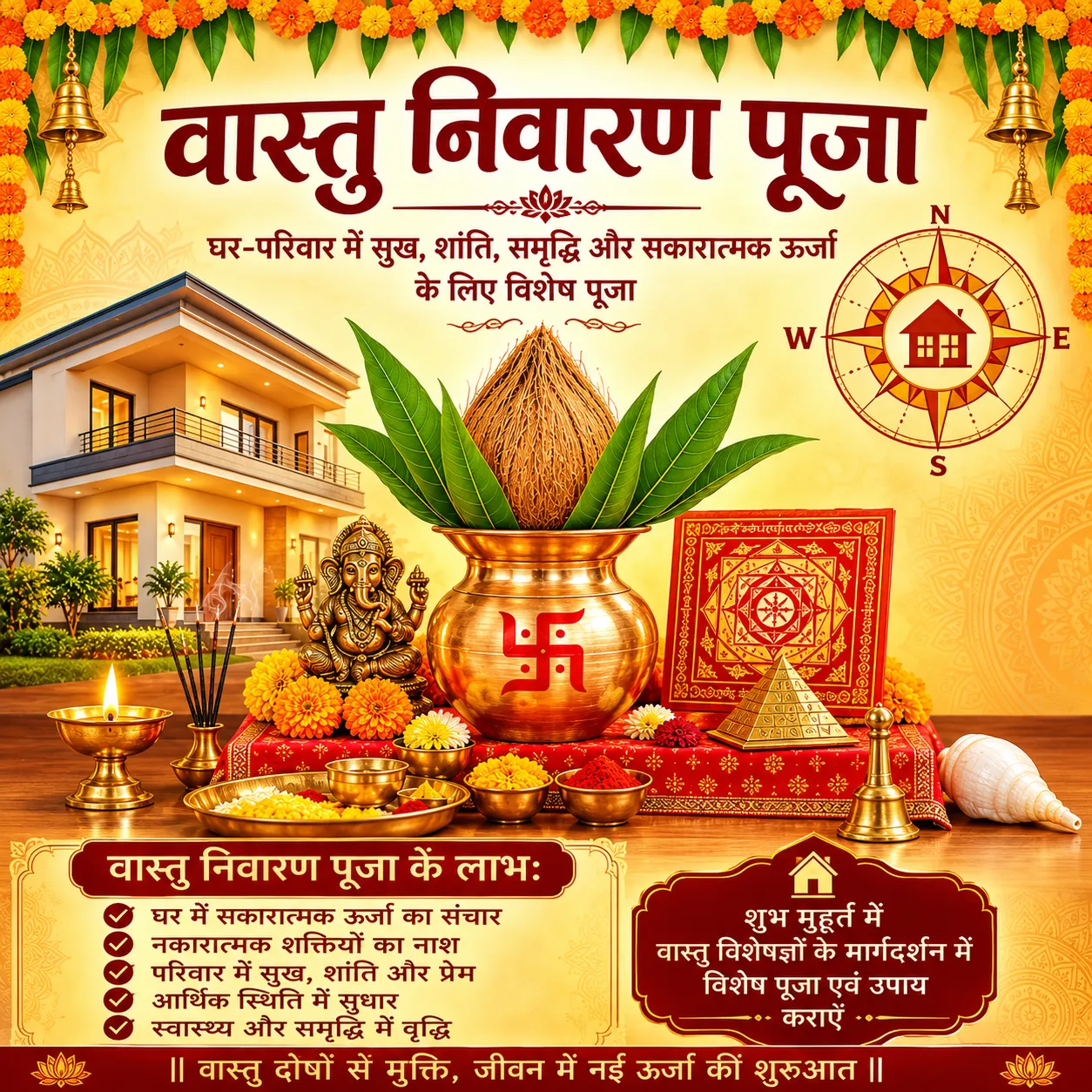
Vastu Dosh Nivaran Puja is an ancient Vedic ritual designed to harmonize human living spaces with the cosmic order. Derived from the Vastu Shastra scriptures—the ancient Indian science of architecture—this ceremony acknowledges that every plot of land and built structure is governed by an underlying cosmic entity known as the Vastu Purusha.
When a structure is built without alignment to nature’s five core elements (Panchabhutas: Earth, Water, Fire, Air, and Ether) or violates directional mandates governed by Vedic deities, a spatial imbalance known as Vastu Dosh occurs. These imbalances emit subtle, negative energetic frequencies (geopathic and cosmic stress) that adversely affect the occupants' health, peace of mind, and material prosperity.
The Vastu Dosh Nivaran Puja acts as an energetic cleansing mechanism. Through Vedic chants, fire rituals (Havan), offerings, and the installation of consecrated symbols like the Vastu Yantra, the ritual pacifies aggrieved directional forces, neutralizes cosmic malefic influences, and fills the environment with positive Prana (life-force energy).
Core Causes of Vastu Dosh
A home or commercial building accumulates Vastu Dosh when spatial functions contradict cosmic directional alignments:
-
Ishan Kon (Northeast) Misalignment: Placing toilets, heavy storage, or kitchens in the Northeast sector blocks the inflow of divine and spiritual energy, often triggering financial hardship and mental stress.
-
Agneya Kon (Southeast) Defects: Locating water tanks or bedrooms in the Southeast (Fire zone) dampens the fire element, leading to digestive issues, marital discord, or legal disputes.
-
Nairutya Kon (Southwest) Imperfections: Having doors, underground water tanks, or cut-outs in the Southwest (Earth zone) causes instability, loss of authority, and severe financial drains.
-
Vayavya Kon (Northwest) Violations: Imbalances in the Air element sector can lead to unstable relationships, career volatility, and legal entanglements.
-
Brahmasthan (Center) Heavy Construction: Placing pillars, staircases, or walls directly at the center of the plot suppresses the vital life force of the entire premises.
 Name & Gotra Invocation: During the Pooja, the priest will chant your name and gotra and seek blessings for you by taking holy Sankalp.
 Live Spirituality and Memorable Experience: You will be notified one hour before the live streaming starts, and you will receive the recorded video of your special Pooja within 4-5 days.
 Punya Opportunities: Earn merit by donating clothes, food, Gau Sewa, or Deep Daan etc. by your name.
 Certificate of Spiritual Journey: We will also provide you a certificate to make your experience even more memorable.
 Divine Prasad: The Pooja Prasad will be sent to you within 7-8 days through doorstep delivery service, so that you can receive it conveniently.
 Name & Gotra Invocation: During the Pooja, the priest will chant the names and gotras of all four family members and seek blessings for your family by taking a holy Sankalp.
 Live Spirituality and Memorable Experience: You will be notified one hour before the live streaming starts, and you will receive the recorded video of your family’s special Pooja within 4-5 days.
 Punya Opportunities: Earn merit together as a family by donating clothes, food, Gau Sewa, or Deep Daan, making this a shared sacred experience.
 Certificate of Spiritual Journey: We will provide a certificate for each family member to make your experience even more memorable.
 Divine Prasad: The Pooja Prasad will be sent to you within 7-8 days through doorstep delivery service, so you can receive it conveniently.